Table of Contents
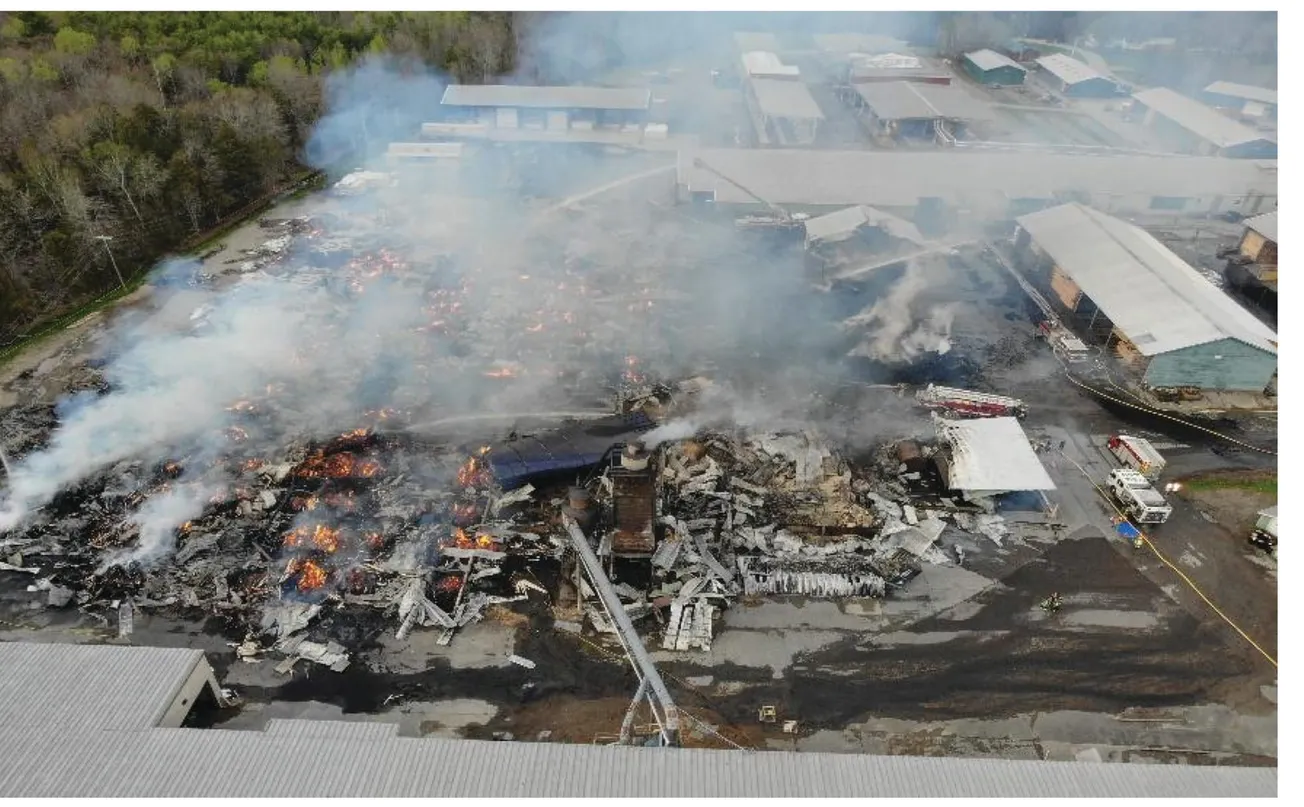
Firefighters who responded to a fire at Robbins Lumber, Searsmont, Me., used tactics that unintentionally contributed to a massive explosion that killed three people and injured more than a dozen others, according to a federal report by National Institute for Occupational Safety & Health investigators.
The fire crews attempted to douse the May 15 blaze inside a silo at the mill by spraying water into an opening at the base, unaware that, as a sealed, oxygen-limiting structure, it can become pressurized with combustible gases during a fire. In time, the silo exploded, shooting the structure into the sky like a rocket as the fiery blast hurled away those nearby.
The silo's manufacturer and fire safety organizations warn firefighters against injecting water or foam into them in the event of a fire.
After some time, firefighters believed the fire was largely under control. Without any warning, the silo skyrocketed into the air, followed by a large plume of fire at the bottom as it rose. The explosion threw surrounding facility employees, firefighters and EMS providers away in a blast of pressure and fire.
Approximately two hours after the explosion, a personnel accountability check found that one firefighter was missing and later declared deceased. Weeks later, another firefighter and company vice president Alden J. Robbins died as a result of injuries sustained at the incident.
In total, 299 firefighters from 46 fire departments across four counties responded to the incident until the fire was brought under control.
The 22-page report urged that fire officers and firefighters be trained on the hazards associated with different types of silos, and on tactics for battling silo fires. Fire departments should also develop a pre-incident plan for all "high-hazard occupancies, such as lumber mills." As well, lumber mills were to make sure their fire safety and evacuation plans include information on combustible dust explosion hazards and share this information with responding fire departments.
Since 1985, NIOSH has investigated six incidents of firefighter fatalities and injuries resulting from silo fires and explosions.