Table of Contents
IN THE RUSH to meet specs and budgets, interior gypsum boards often get lumped into the “commodity” category where they are bought, stocked and sold with little thought beyond price. But smart dealers know better. The right gypsum board can make or break a project’s performance, from fire resistance and sound control to moisture management and finish quality.
By helping builders and contractors choose the best board for each job, dealers can move beyond transactional sales and become trusted project partners. After all, gypsum may look the same on the pallet, but what’s inside can make a world of difference on the wall. Let’s look at a few things to consider when selling gypsum boards.
Sell Project Value
Got a customer that views gypsum boards as interchangeable? Here’s how to change that dynamic: educate customers on performance differences between product offerings. The result: shifting purchase parameters from price per board to value per project.
When Can I Get It?
Contractors hate downtime and wasting money. Offer products that allow your customers to focus on on-time deliveries, especially during rush building seasons. Promote local availability and short lead times as product offering differentiators. Encourage your customers to focus on reliability, convenience and timeliness.
Ensure Product Technical Support
As a dealer, consider promoting manufacturers who are able to provide project guidance, technical and design resources, code-compliance support and more. Ease of accessing technical help is important to your customers; this extends to assembly specifications and local code requirements. Offering customers the highest level of service and support takes the relationship beyond selling materials: you’re helping customers win bids and avoid costly mistakes.
Product Attributes & Comparisons
Glass Mat Gypsum Products
Choosing glass mat gypsum products (over paper-faced) allows for superior mold and moisture resistance with the elimination of the paper face, which can be a food source for mold. Offer your customers a glass mat product for areas with higher moisture exposure or where maximum mold resistance is needed.
Attributes: Feature fiberglass mats instead of paper- faced provide superior mold and mildew resistance; eliminate a potential food source for mold growth.
Recommended applications: Interiors of exterior walls where moisture intrusion is likely; pre-rock areas; high-moisture rooms (laundry, bath, kitchen, basement); projects where reducing remediation costs is important.
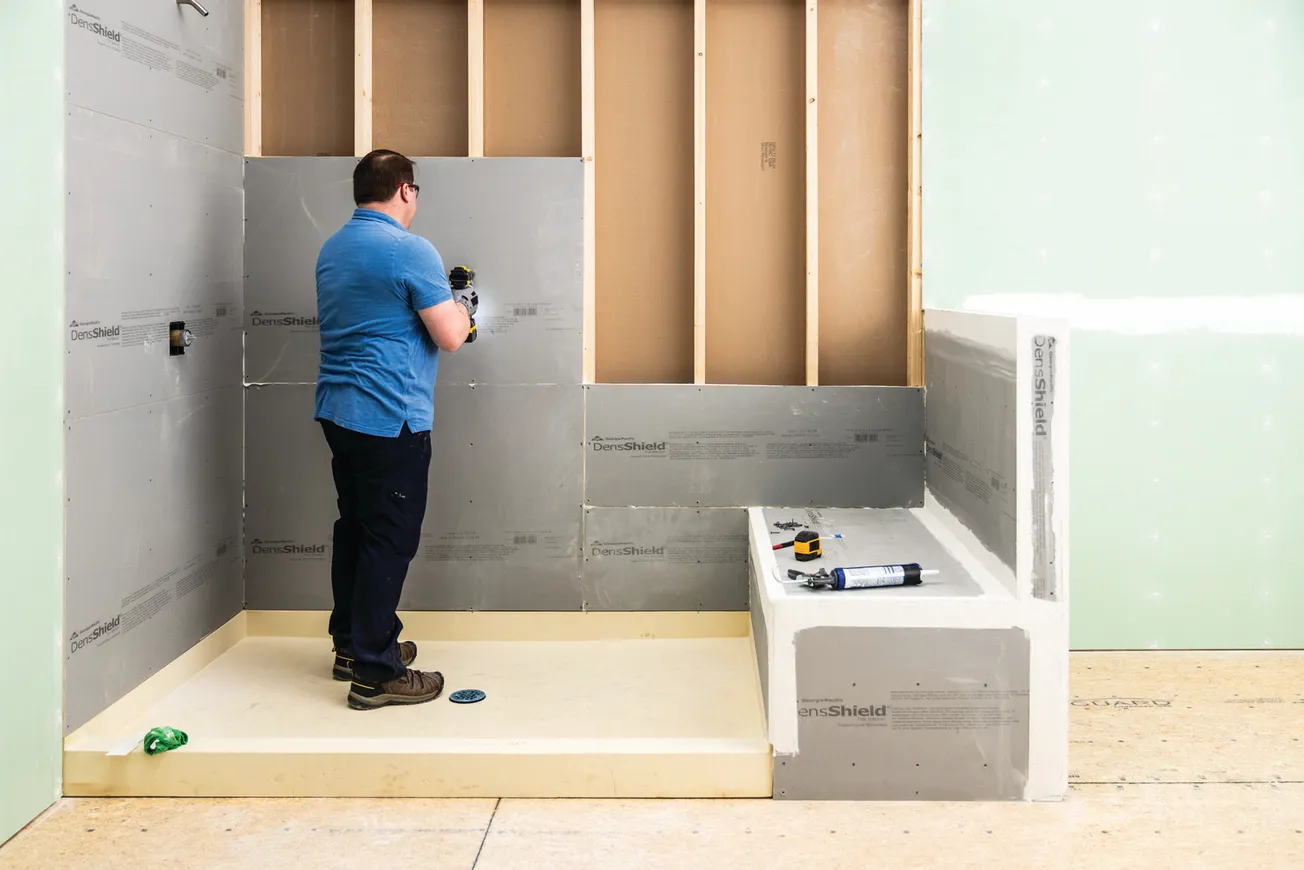
Glass Mat Coated Tile Backer
Attributes: Coated tile backers stop moisture at the surface, helping to protect both the tile installation and wall cavity. They eliminate the need for an additional waterproofing membrane, which is required for cement and fiber cement tile backers in wet areas. The right backer offers a built-in moisture barrier for faster tile install; is easy to install with no special tools, fasteners or separate moisture barrier required; is lightweight/easy to cut/handle; scores the highest level for mold resistance; and is considered vapor semi-impermeable.
Applications: High-moisture areas (tub/shower walls, residential steam rooms, indoor pool enclosures); general use areas (walls and ceilings as tile substrate, residential and light commercial floors, countertops).
Build on Value, Not Volume
When you move beyond price and start selling performance, it’s possible to elevate your role from material supplier and dealer to project consultant. Whether it’s recommending a mold-resistant glass mat board for pre-rock applications or highlighting labor savings with coated tile backers, every conversation becomes a chance to demonstrate value. In a competitive market, that kind of partnership doesn’t just move product, it builds loyalty that lasts long after the drywall mud dries. MM
– Tod McKirnan is sales enablement operations manager for gypsum board manufacturer Georgia-Pacific (www.gp.com).