Table of Contents
As it nears completion of a two-year, multi-phase project to expand its glulam operation, Rosboro Co., Springfield, Or., re-examined its approach to drying.
“We were searching for a solution to a lumber drying capacity bottleneck, but we had nine existing double- track kilns,” said vice president Brian Wells. “We did not have space for a tenth.”
As well, a tenth kiln would pull more heat and cost more money to maintain and run. So the challenge was finding a way to increase production without adding a new kiln.
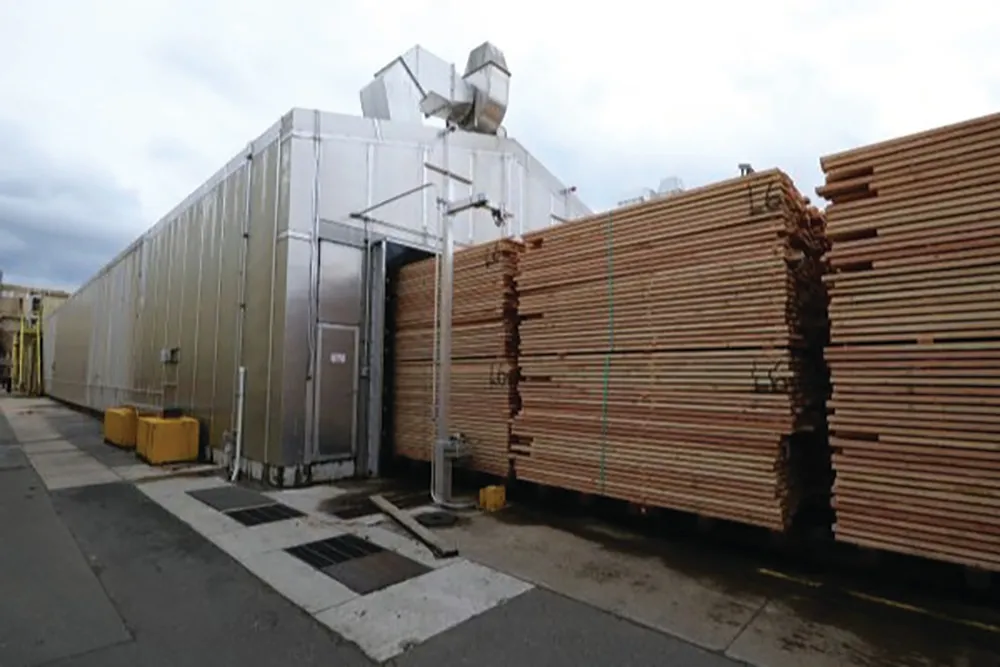
USNR’s winning bid for the project involved converting four of Rosboro’s existing kilns into its patented Uniflow kilns. These models offered the same automated approach to efficient lumber drying as the Counter-Flow kiln, but with both lumber tracks moving in the same direction instead of opposite directions. This will result in higher throughput using an existing heat source with no loss of lumber quality.
They also significantly reduce the risk of sudden and unpredictable fluctuations in steam consumption and reduce demand on the boiler. The higher product volume is comprised of fiber that’s straighter, flatter and contains fewer checks and splits.
It was exactly the solution Rosboro had been looking for and promised the best ROI. “USNR did a very good job of being creative and listening to what our real need was and not just pushing a preconceived solution on us,” said Wells. “We’re definitely getting the financial returns out of this investment.”
Now up and running, the upgraded kilns are performing better than expected. By converting just four of their kilns, they were able to increase production by 10-40% and improve energy efficiency with more consistent steam use.
And, just as importantly, the new production levels keep emission levels below regulatory requirements.
The overall project, announced in the spring of 2024, also includes a state-of-the-art lamstock planer mill and technologically advanced laminating plant.