Table of Contents
BY TIMM LOCKE
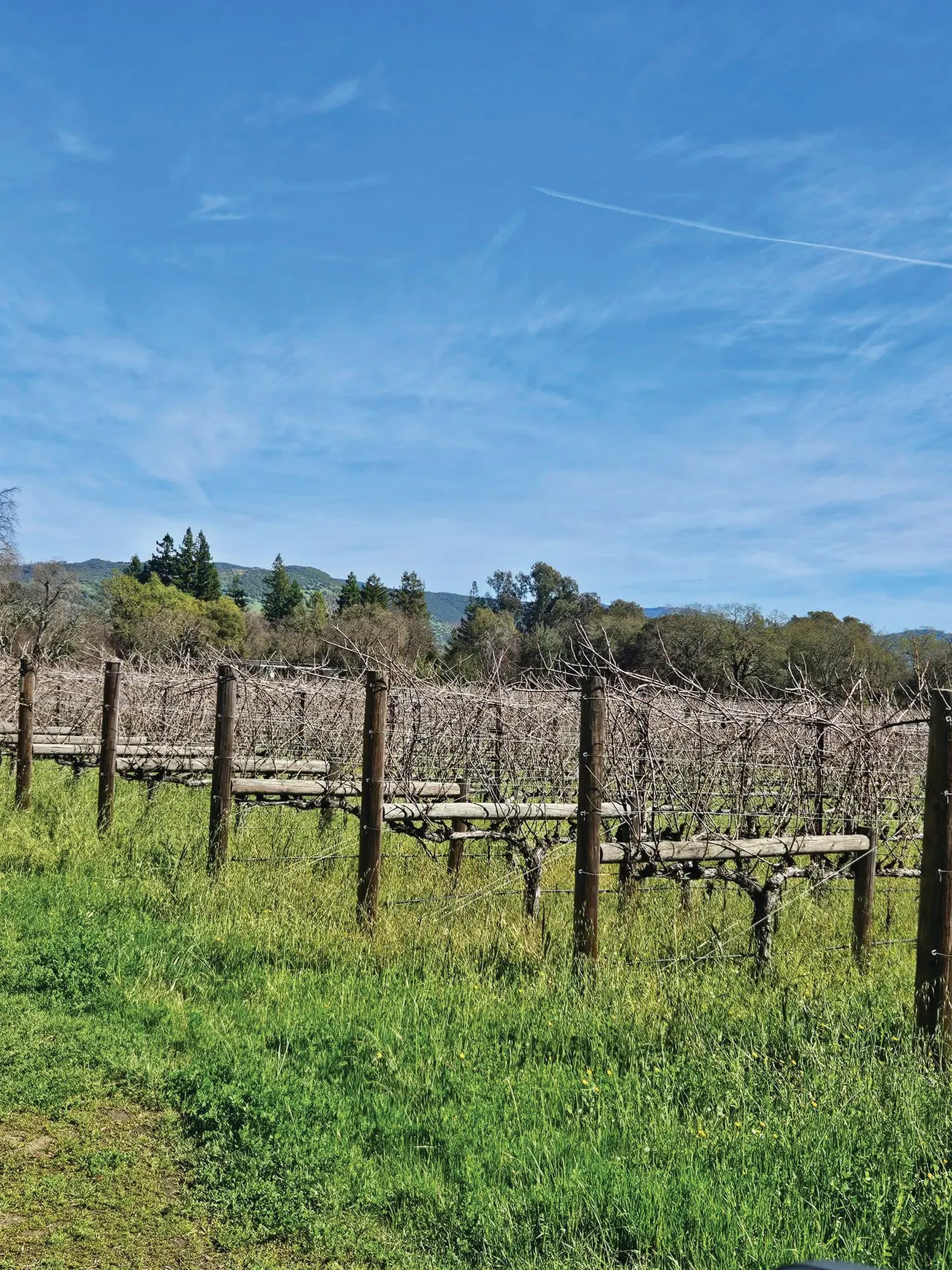
GRAPE GROWING is big business, particularly in major wine producing states like Oregon, Washington and California. It also represents a good market opportunity for preserved wood, at least in some areas.
A recent interview with Johnnie White, Jr., of Pina Vineyard Management in Rutherford, Ca., uncovered details about the advantages preserved wood has over alternative products as well as insight into how much preserved wood vineyards might use.
White’s firm is a full-service vineyard management and development company. “We farm grapes for about 70 different clients,” he said, “We also help clients build vineyards or redevelop existing vineyards to other uses.”
He said preserved wood has long been a preferred material for building the trellises on which grape vines grow. “Trellises are built with either wood or steel, and steel costs about 50% more than preserved wood,” he said. Vineyard owners also value wood for its renewability and the aesthetic it provides, White explained.
Specific products vineyards use to build trellises include what White referred to as “lodgepoles,” “tomato stakes,” and “grape stakes.” Lodge poles are about 6" in diameter and 8-10 ft. long. A tomato stake measures about 3/4”x3/4”x4 ft. long and grape stakes are 8-ft. 2x2s.
According to White, “A typical vineyard will have about 1,500 vines to the acre, and every vine gets a tomato stake. There are lodgepoles at both ends of every row so, depending on the layout, that’s something like 400 lodgepoles per acre. On top of that, there might be additional lodgepoles and around 400 grape stakes to make structures that allow the leaves to spread out so sun can reach the lower portions of the vines. “And that doesn’t account for what’s used for things like deer fencing.”
At his cost, White said, the preserved wood trellis materials could run more than $15,000 per acre.
For a niche market, that’s a lot of preserved wood.
Unique Disposal Challenges in California
Every state other than California follows federal guidelines concerning disposal options for preserved wood used in agricultural applications:
• It can be reused in a manner consistent with its original intended use
• It can be burned in properly equipped biofuel cogeneration facilities
• It can be disposed of alongside other solid waste materials at municipal landfills.
Preserved wood waste should never be burned in open fires or in stoves, fireplaces or residential boilers, as hazardous chemicals could be produced as part of the smoke and ashes. It also should never be ground into mulch for landscaping or animal bedding.
In California, the state’s Department of Toxic Substances Control (DTSC) regulates how treated wood waste (TWW) is to be handled. The maze of DTSC rules regarding TWW along with the many other substances under its purview is not always easy to navigate. The regulations often involve added work and costs which can be a burden, not just to grape growers, but to all preserved wood users in the state.
“Unfortunately, those added headaches and costs have caused some California vineyard owners to reconsider their preference for preserved wood,” White said.
To help lessen the burden, along with the headaches and costs, brought on by the DTSC regulations, WWPI developed TWWdisposal.org, which it manages in conjunction with the DTSC. Focused exclusively on TWW in California, the site lists disposal and transfer facilities currently authorized to accept TWW and it helps clarify the rules and regulations, including who in the preserved wood value chain is affected in what ways. Lumber distributors and retailers generally are not affected by the TWW regulations, but knowledge of the website can be a big help to customers.
“With information available on TWWdisposal.org, WWPI helped me better understand which regulations and fees apply to my business and which do not,” White said. “That saved me from having to pay around $300,000 in fees that I had been wrongly assessed.”
In other states, such as Oregon and Washington, regulatory barriers regarding TWW don’t exist. While grape production in these states lags California by a good margin, in both states it’s been increasing in recent years, making them markets ripe for exploration.
– Timm Locke is director of marketing for the Western Wood Preservers Institute (www.wwpinstitute.org).